
I (Sasha) am yet again grateful to Damian for lending me this opportunity to give the people what they want: sitting in judgment of our fellow people.
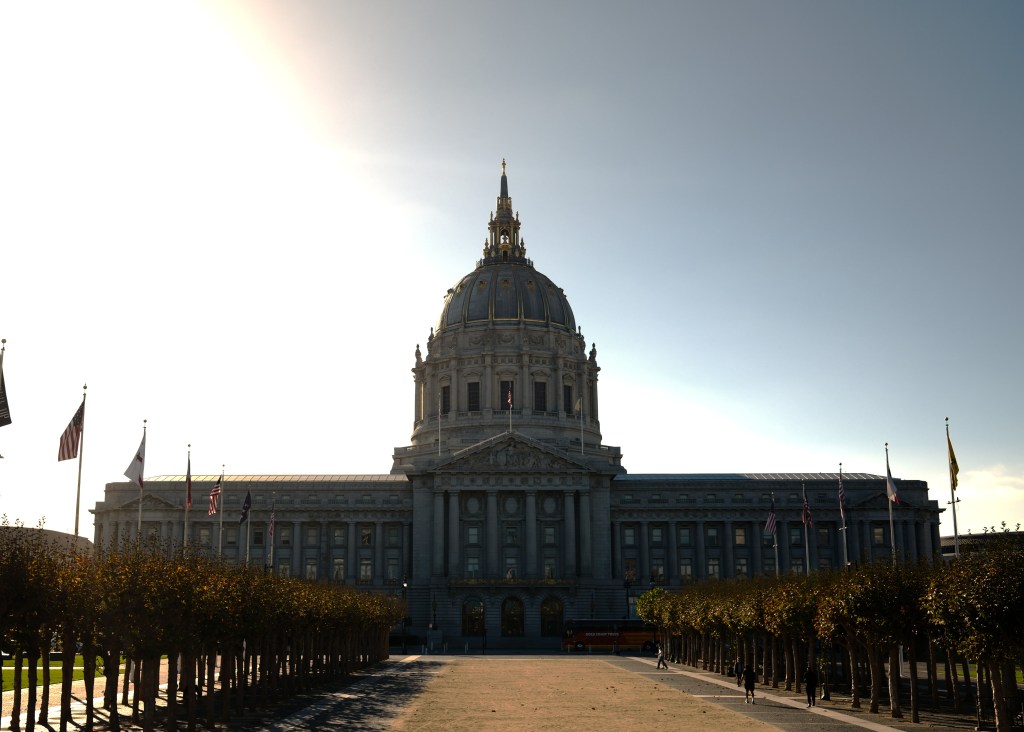
Ballots are here, and Election Day 2026 is soon – Tuesday, November 3rd. If you’d like more on voting logistics, see the earlier article on this year’s ballot measures. The two things most important things to repeat here are:
- At this point DO NOT mail your ballot (in a mailbox). Physically take it to a polling place or a ballot drop box. (Why?)
- In California, if you’re a US citizen and resident of the state, you can in fact register to vote up to and on Election Day – but take care of it earlier if you can!
This is the Candidates Supplement for this year’s voter guide. Ballot measures are easy* to describe objectively; people are harder. It’s much easier to say what a proposed law will do than what a proposed elected official will do. To explain our recommendations requires us to actually give some insight into the state of the city, what is happening and will be happening with politics in the near future, and help you think through the big responsibility of picking people to run the show here.
San Francisco
Candidates are highlighted with what “team” they’re on (more on this later). The colors follow European political brand conventions; Red Team is not the Republican Party, they’re to the left* of Blue Team, with No Team somewhere between the two. Some races are really the lesser of two evils and the suggestion you vote a particular way is not an endorsement of anyone’s character.
| Office | Vote For (some under duress) |
|---|---|
| US Congress | It’s complicated – see below |
| CA Assembly, D17 | Matt Haney (megasigh) |
| CA Assembly, D19 | Catherine Stefani (sigh) |
| Supervisor, D2 | Stephen Sherrill (sigh) |
| Supervisor, D4 | #1 Jeremy Greco #2 Alan Wong (sigh) |
| Supervisor, D6 | Alex Behrend |
| Supervisor, D8 | #1 Gary McCoy, #2 Darshini Patel |
| Supervisor, D10 | #1 JR Eppler #2 DJ Brookter |
| Board of Education | Reina Tello, Virginia Cheung, Ryan Hazelton |
| City College Board | Bunny McFadden Leah LaCroix Jeremy Lee |
| Others | All Unopposed |
California
Most statewide races will be straight Democrat vs. Republican races with an obviously better option, except for a few cases where there are two Democrats, where we can have more of a debate on the merits.
| Office | Who’s the Democrat (*except where noted) |
|---|---|
| CA Governor | Xavier Becerra |
| CA Lt. Governor | Fiona Ma |
| CA Controller | Malia Cohen |
| CA Sec. of State | Shirley Weber |
| CA Treasurer | Eleni Kounalakis |
| CA Attorney General | Rob Bonta |
| CA Insurance Commissioner | Ben Allen* |
| CA Superintendent of Public Instruction | Richard Barrera |
| CA Board of Equalization, D2 | John Pimentel* |
The Buffet of Knowledge
The rest of this guide is advertised with its section headers, with the expectation that you will open up whatever interests you. There’s a lot going on and unlike with the propositions, we’re not doing a deep dive of each person, more of an explainer of some themes. A few key races – like San Francisco’s first competitive race for US Congress in 40 years – have their own section, while the rest are captured by their broad notes.
We’re going to talk very little about statewide races because they’re almost all straight Democrat/Republican races, with the Republican candidate reliably being worse1. Two statewide races are D-on-D and we’re going to repeat the logic from the June primary election for them.
“Red Team,” “Blue Team,” and “No Team” – What Are Those?
A better way of understanding things than “Progressives” vs “Moderates”
San Francisco has been an important city for long enough to have grown a political machine system, where teams of elected officials and their friends in high places – community leaders, small business owners, large business owners with money to burn, etc – team up to pass legislation and hold onto power by winning elections. There are, ostensibly, ideologies to these teams – the two big ones are called the “Progressives” and the “Moderates,” with a small number of elected officials and many more outside groups that work flexibly between them.
The primary goal of each team is, first and foremost, to hold political power, and both the “Progressive” and “Moderate” labels are not factual descriptions of who’s actually on the two sides. There are some shockingly conservative people and ideas in mainstream “Progressive” politics, and the “Moderate” label is really the average of people whose politics span everything from Zohran Mamdani’s New York to an AI-powered return to medieval feudalism (I really wish I was making this up).
Here we’re calling the teams by their branding – the “Progressives” are Red Team, the color of (key supporter) DSA and the everywhere-but-the-US color for left-wing parties.2 The “Moderates” are Blue Team, the color of (key supporter) GrowSF and the non-US color for more right-wing parties. While there’s no organized “unaligned” group, there are a few Supervisors and some important organizations who are clearly willing to play both sides and vote their conscience; we’ve tagged them as No Team. The colors don’t imply “good” and “bad” – both sides are pretty clearly willing to sell out their stated values, and ideally our electeds would be willing to make unpopular but correct decisions when presented with the opportunity.
Red Team and Blue Team compete for control of elected offices, with a “promotion” system – it’s common to first be elected to the SF school board or community college Boards of Trustees, before running as your team’s candidate for supervisor in your district, and then later running for mayor or other citywide office, like a representative in the state legislature.3
Also important are the elected seats on the San Francisco Democratic Party (the “County Central Committee,” or DCCC), which decide what propositions and local candidates are officially endorsed by the Democratic Party each election cycle. This turns out to be important when almost every candidate and 80% of local voters are Democrats, with the party endorsement typically moving the vote by 5-10 percentage points. The DCCC elections are held at a strange time separately from other elections, and Blue Team invested heavily in winning the most recent one and now firmly control the endorsement process.
The current Board of Supervisors is split 5–2–4,4 with mayor Daniel Lurie caucusing with and generally passing his priorities with the Blue Team and one or both of the No Team members, although there’s a fair bit of crossover – for example, Prop B made it onto the ballot by unanimous vote of all 11 supervisors. The District 10 race is one of the most important this cycle because it’s the biggest Red –> Blue pickup opportunity, which would give Blue Team an absolute majority and enable quite a bit more legislating in the next two years.5
You’ll note that we haven’t discussed much of what the two sides “believe in” – partly this is because what they demonstrably most believe in is “being in power,” partly because it varies a lot by individual, partly because the battle lines are actively changing. It’s perhaps easier to list out each team’s reliable supporters and discuss how those supporters’ incentives become the teams’ policies.
Red Team Players
- Wealthy, older, socially progressive homeowners
- The League of Pissed Off Voters, DSA San Francisco, and similar activist groups
- Most local labor unions
- Most local small business groups
- Nonprofit contractors for the city, i.e. TODCO
Blue Team Players
- Large technology companies and their executives (i.e. GrowSF)
- SPUR and other “good governance” types
- Uniformed services unions (fire, police)
- Groups with “YIMBY” in the name
At the risk of being too cynical, we can write each team’s platform as a list of each of their key supporters biggest wishes. This is necessarily an oversimplification – there’s infinite nuance as to who believes what – but you’ll be more right than not if you use this to predict the behavior and beliefs of people who intentionally identify with one of the two teams.
Red Team Platform
- Preserving San Francisco’s reputation for inclusion and cultural significance, and the physical representations of those things, like streets and buildings
- Actively using the powers of the city government to advance social and economic justice
- Higher pay and benefits for unionized service workers and city staff
- Protecting culturally important local small businesses from competition by better-funded and/or larger rivals
- Freeing less wealthy San Franciscans from the competitive rental market by creating a parallel market that only they are eligible for by subsidizing apartments built and operated by not-for-profit landlords
Blue Team Platform
- Making it more predictable to operate a technology company in SF, by preventing new taxes on them and generally promoting technology as a solution to problems
- City governance reform to make it cheaper and easier to provide city services, with less direct citizen input on government decisions like planning and ballot initiatives
- Higher pay and benefits for fire/police officers to encourage hiring, service quality, and retention6
- Making it easier and more predictable to build housing – especially dense housing near transit – forcing landlords to compete with each other more and bringing down rents
Committed team players on both sides will often paint the other as being evil, stupid, or both, and I’ve tried really hard to be charitable here and describe both teams in positive, factual versions of their own messaging. You’ll note that Red Team talks a lot more about preserving things, and in that sense is arguably more small-c conservative, despite being the nominally “Progressive” team. You’ll note also that Blue Team‘s throughline is “predictability” and “consistency” and fewer opportunities for the public to weigh in on things, which have a lot of benefits specifically for the wealthy and powerful.
It’s fair to say Blue Team has been on the rise and winning in the last five years. There’s a lot to this; their supporters spending a lot more money, but also the perceived failures of Red Team governance and how central building housing has been to the Blue Team brand after decades of high housing costs. After a lot of chaos following the pandemic – some of it unavoidable, some of it intentionally engineered by i.e. the police department – a message of “predictability and consistency” also picked up a lot of interest from many voters who aren’t particularly ideological.
Why does any of this matter? A large number of voters are Red Team or Blue Team voters based on whose voter guides they follow and who they generally take politics advice from.
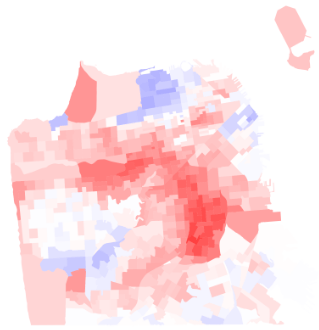
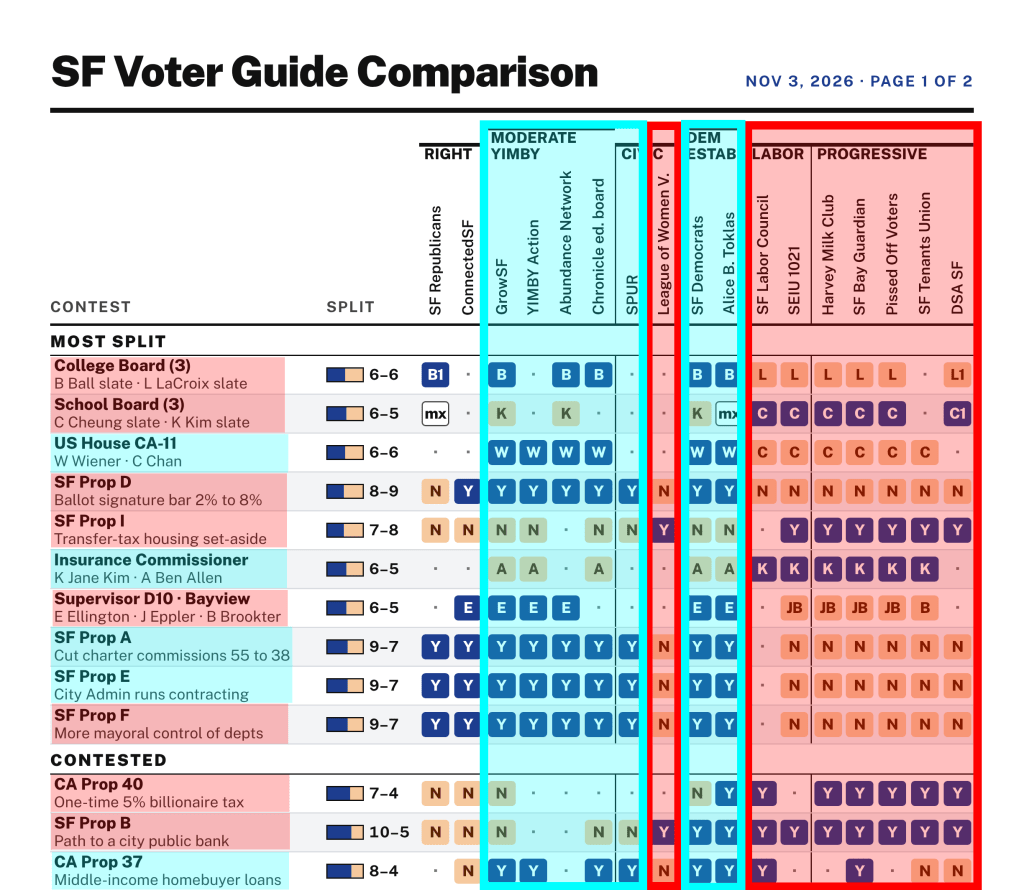
Because each team has a public agenda and their Supervisors generally vote as a bloc, a vote for a candidate is a vote for that team’s agenda – and this is especially true given that Blue Team is on the cusp of an absolute majority on the Board of Supervisors, which would let them unilaterally pass legislation.
The winds of change are blowing. I have a post-election article about Daniel Lurie in the works (please subscribe), but the important part right now is that he’s not really a Blue Team player – he has his own money and doesn’t need theirs, and he has his own priorities that often (but don’t always) overlap with theirs. He’s popular enough (and has enough resources, both fiscal and political) that his goals are starting to shape Blue Team‘s priorities, so that they can ride his coattails to further success.
The most notable instance of this is housing. Everyone wants to be “pro-housing,” (Red Team candidates included), but Lurie’s actual commitment to the Blue Team vision of building housing is quite dubious. Lurie and Blue Team spent a lot of time and energy last year passing the Family Zoning Plan, a piece of legislation to ostensibly reform SF’s zoning laws to make it easier to build housing to settle an agreement the city had with the state. This legislation was designed… well strangely for a pro-housing policy – it’s very hard to use its benefits on a construction project, and it’s done very little to trigger new construction in the year it’s been law. YIMBY lawyers are suing the city, alleging the policy is so badly written that it’s out of compliance with state law. At Lurie’s direction, Blue Team also voted unanimously with Red Team to (probably illegally) exempt big chunks of the city from a different state law authorizing new housing development, triggering another YIMBY lawsuit.
The explanation here is simple: Lurie probably doesn’t really care that much about building housing, and he’s important enough to Blue Team that he can overrule the pro-building parts of the coalition and bring their Supervisors along with him. The next year will show how true this is, but if current trends hold, how will the YIMBY organizations and their voters feel about being sold out? Big swathes of Red Team have historically been hostile to YIMBY-types – sometimes proposing literally executing them – but times are changing. New voices – like the broadly Red Team-aligned SF Solidarity Club – are trying to bring YIMBYism into SF’s “progressive” agenda, and the old guard, who have tended to be the loudest against new construction, are literally dying – John Eberling, the longtime nonprofit slumlord moron president of major housing nonprofit TODCO being a notable example.
The punchline here is that, as YIMBY organizations are now learning, the political machine system is not a good way of actually achieving any specific policy goals. This is a big part of why our recommended first candidate is, where possible, generally a No Team candidate. They tend to care more about the actual issues, and that forces the other Supervisors – even the machine-aligned ones – to engage more substantively with them. This speaks to one of the animating philosophies of all of the voter guides that we’ve written: no one has a monopoly on being right. Paying too much attention to who has endorsed what is what gives the machines their power. Don’t ask “am I voting the way my team told me to?” Ask “will this make good things happen?”
We were serious about the call to subscribe. Do you want to read a psychoanalysis of Daniel Lurie when it comes out? Of course you do.
Who Should I Vote For For Congress?
We have a real answer! Some reading required
If you know who you want to vote for right now, you should actually skip this section, because regardless of who they are we’re going to tear down your preferred candidate. Nothing we have to say here should persuade you out of your own informed opinion – the target audience here is the uninformed and the deeply conflicted. This disclaimer is why, while we have a recommendation, we didn’t put it up in the table, you have to actually read.
Back in June we laid out the case for Saikat Chakrabarti for Congress (and the case against both Scott and Connie), and I stand by what we said. Saikat did not make it out of the primary; I think it’s reasonable to be skeptical of polls showing him beating Connie Chan, but his campaign staff believe in them, and they claim their internals cratered in part from the millions of dollars in Scott Wiener SuperPAC spending on negative, anti-Saikat PR. The same firm is now spending millions on anti-Connie Chan PR, of which several pieces have probably wound up in your mailbox, and then probably promptly in the recycling bin.
It’s important to mention that, despite filling Nancy Pelosi’s four-decade-old seat, our future congressperson is likely to be irrelevant when they get there and for a long while afterwards (assuming they really follow in Pelosi’s footsteps and stay). Occasionally a freshman congressperson gets early public attention that comes with accelerated career advancement – consider AOC or Marjorie Taylor Greene. These folks caught fire because they were useful for their opponents to promote and also have political talent and say interesting and memorable things on camera. These are unlikely to be true of either Scott or Connie.
Becoming California’s District 11 congressional representative doesn’t give you any of Nancy Pelosi’s power and influence; it makes you a back-bencher, someone who – if they reliably vote the party line and suffer through fundraising – might get a sentence or two into a piece of legislation. This fact undercuts a lot of their positive arguments for themselves – most notably Scott’s career as a legislator in California is not likely to translate into near-term results were he in Congress.
We’ve laid out what will definitionally happen and what might happen based on who gets elected to Congress:
Will Happen if Connie Elected:
- Daniel Lurie will get to appoint the D1 supervisor, who will serve until the June primary election in 2028
Might Happen if Connie Elected
- Lurie gets to appoint someone to fill Connie’s now vacant seat. He will gain another ally on the board will net Blue Team a seat on the BoS, as Connie is firmly Red Team
Bad things she might do in Congress:
- Divert federal transit money destined for SF away from good projects to bad ones
- A one-liner in a federal law which removes Sunset Dunes Park
Will Happen if Scott Elected:
- A special election to fill the last ~2 years of his State Senate seat, in the first half of 2027
Might Happen if Scott Elected
- A very messy race to replace him at a low-turnout special election, which will almost certainly elect a worse state legislator, Mandelman and Haney circling like hyenas
Bad things he might do in Congress:
- Vote against future consequences on his very wealthy backers in tech and AI
- Flip-flop again and vote against sanctioning Israel for the genocide in Gaza
It’s fair to summarize the choice here as being between “a candidate whose election will immediately tip the balance of power locally and who can use her limited federal powers to continue settling local scores” and “a candidate with more complicated consequences of getting elected who can and probably will cast unconscionable protest votes against future Democratic priorities.”
I won’t begrudge you for taking a more positive outlook and having a particular policy that you think your preferred candidate really cares about and has the persistence and skill to pass into law. The arguments above are very cynical, and if you know how you’re voting I have no interest in convincing you otherwise. I think the downsides (both known and speculative) of picking Scott are lower and I’m voting for him. It’s our job to get a better choice next time around.
An Interjection from Damian
I know the vast majority of people come here for keen analysis from Sasha, interspersed with witty jokes from me, but I want to take a different approach to making the case for Connie Chan. I will do zero analysis or politicking; instead, I’ll give you the best feelings, nonsensical reasoning, and appeals to emotion.
- First and most importantly: my gut says no to Scott. His vibes are bad.
- Connie reopening the Great Highway via federal intervention would be hilarious, maybe the single funniest thing that could ever happen in SF politics.
- Scott’s history of Zionism, like writing AB 2844 (California’s anti-BDS law), attacking pro-Palestinian activists, and not to mention AIPAC pouring money into this race.
- Many of the most annoying people on the internet are supporting Scott, and this vote doesn’t really matter in the grand scheme of things #bourgeoiselections
I’m voting Connie, so in amusing fashion, Sasha’s vote and mine cancel out, meaning it was all a wash. Like he said it’s our job to get a better choice next time around. /exit damian
What The Hell Is Happening With Manny and D8?
A story Aaron Sorkin would write (because of how few female characters it has)
Procrastinating on writing this has been very helpful because a lot has happened and I get to just summarize all of it without having to issue corrections.
Fair warning up top: this involves a non-graphic discussion of sexual assault. Skip ahead to the next orange banner if you don’t want to read that.
9 months ago, Manny Yekutiel (founder and owner of popular political venue “Manny’s Cafe”) was the heir presumptive for the District 8 supervisor’s seat. A staunch Blue Team ally with piles of money, institutional support, and widespread local name recognition, it was his race to lose.
Manny is a gay man and has spoken openly about how moving to San Francisco and being a part of the gay community was a life-changing experience for him and an opportunity to escape his conservative upbringing. The thing that ended Manny’s campaign was a series of other gay men who came forward describing their experiences of Manny aggressively groping them at parties.
The first allegations came in June, from a man who described Manny assaulting him at a party in pre-COVID 2020, supported by contemporaneous texts to friends and family. He described the experience as “violent” and “demeaning.”
Here at the Damian Writes About Stuff newsroom we happened to get early notice about this, including the fact that the SF Chronicle heard and then refused to run this story. This, let’s say, reticence – to Manny’s benefit – continued after these allegations came out in a competing newspaper. Relatively little coverage or soul-searching ensured, and Manny later secured the local Democratic Party endorsement, as well as Mayor Daniel Lurie’s. I think it’s fair to say this was all Blue Team circling the wagons around Manny, and a number of Blue Team-ers tried really hard to imply that these allegations were motivated lies, given that the first man to come forward was a well documented local political figure on Red Team. This argument floundered rapidly when two more men – both politically unconnected – came forward with allegations of Manny assaulting them at a party. The reaction this time was immediate, with major elected officials dropping their endorsements that afternoon and Manny ending his campaign before sundown.
Skip to here
The race is now between Gary McCoy, a former Nancy Pelosi aide, and Darshini Patel, a former DoorDash product manager and staffer for Obama and Kamala Harris. Michael Nguyen, a local lawyer, is also running for the seat; he does not appear to stand a chance. GrowSF, a major Blue Team PAC (which hates Gary McCoy because he proves you can recover from addiction-induced desperation) polled the D8 race after Manny dropped out. Rumors abound that they were trying to figure out if they could successfully campaign for Manny (… without his consent) and then rely on him to drop out after “winning,” so that Daniel Lurie (as mayor) would get to appoint the D8 supervisor instead of letting people vote for one of the other candidates. There are lots of reasons to doubt what GrowSF said they saw in the poll, but they claim 1) the Manny plan was not going to work and 2) that Darshini was competitive with Gary, and thus endorsed her (purely because they hate Gary). The same poll showed Michael Nguyen in 4th place, behind (dropped-out) Manny.
The rest of Blue and much of Red Team have endorsed Gary. Both him and Darshini are likely to be true wildcards on the Board of Supervisors, and both their stated policy goals are pretty decent and similar to each other. They both earn our shrug of approval, but in the hopes of having a slightly more reasonable-seeming person in the role I’d rank Gary first.
What’s Up With The Two Interesting Statewide Races?
I hope you’re excited to learn about the State Board of Equalization!
Let’s discuss two elected offices that should not exist: The California State Insurance Commissioner and the State Board of Equalization.
Insurance Commissioner – Ben Allen
Insurance is a slow-burning disaster in California. The core of the problem is 1) climate change increasing the rate of significant property damage 2) homeowners in fire-prone areas stealing your money lobbying for rules that prevent insurance companies from accurately pricing climate risk 3) insurance companies responding to this rationally by refusing to issue new policies. As the Palisades wildfires showed, disasters cause large, concentrated losses, with large numbers of people on the state’s special high-risk insurance plan because they could not buy conventional insurance. The plan is funded by a tax on all insurance companies operating in the state, and as such is effectively a subsidy for people living in risky areas – what my favorite socialist writer calls “bad climate socialism.” This is also what would happen if the state took over the entire home insurance market (as one candidate is proposing) without managing retreat from climate risks.
A better insurance market in California probably requires people to leave risky places to live and for insurance prices there to reflect the actual likelihood of disaster. Ben Allen has the most credible plan for encouraging this, including a willingness to let insurers accurately price risk, which allows them to come back to the state. This is unpopular in disaster-prone areas but ought to be popular for the rest of us.
His opponent, Jane Kim, is a long-time Red Team player from SF who probably would have been our current state senator (instead of Scott Weiner) had a Chinatown organizer named Rose Pak (namesake of the subway station) not died inconveniently shortly before Election Day in 2016. She is also the platonic ideal of the Bad Climate Socialist mentioned above. I would really like to be able to keep my newly-acquired renter’s insurance and to not subsidize people who get to live in the redwoods. Vote Ben Allen.
State Board of Equalization – John Pimentel
The California Board of Equalization is a unique government agency in America, being the only elected tax appeals board – that is, a government agency that you can appeal your tax bill to, run by people who have to run for reelection. This is so obvious a corruption opportunity that the board was nearly dissolved in 2017.
There remain 4 elected seats on the board; almost all of coastal California is in District 2. The incumbent, Sally Lieber, claims to have the longest surviving marriage to have come out of Burning Man; her progressive challenger, John Pimentel, is interested in closing loopholes in state tax policy so that there is more money available to spend on progressive policy. In his last statewide role he abolished a police agency; in his current role in Menlo Park, he worked to abolish a parking lot (and turn it into subsidized affordable housing); and if he wins election to this seat, he claims he will try to abolish his own job. He has my vote.
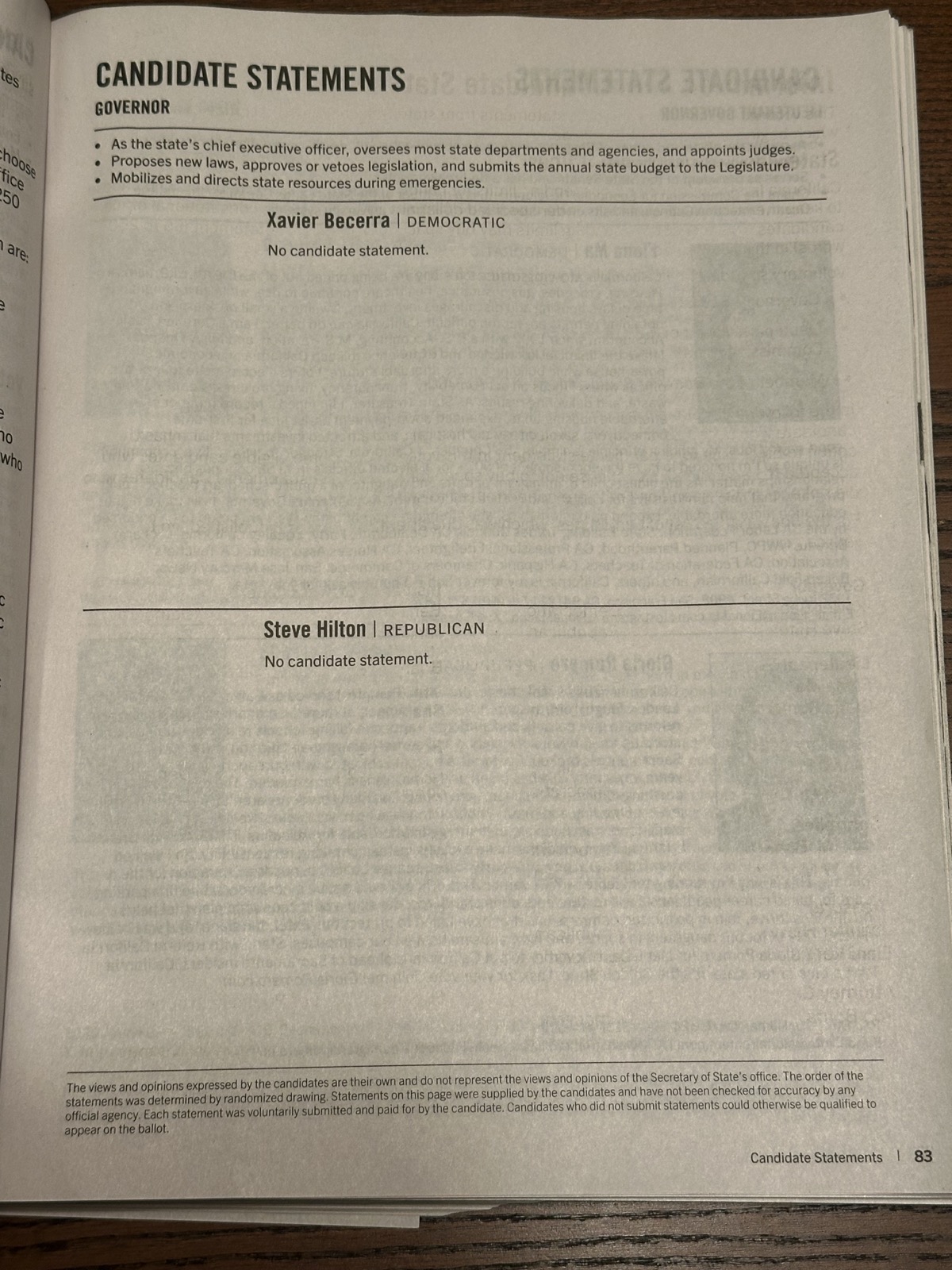
- To see symbolically how our D vs R races in California matter see the Governor Candidate Statements from the State Ballot Guide.
 ↩︎
- Both the Democratic Party and Republican Party interchangeably used both red and blue in their branding until relatively recently. There’s an urban legend that Fox News staff thought red looked better on TV and preferentially used red for the Republicans, and other channels followed suit. Even before the parties adopted the colors themselves, TV news showed so many Electoral College maps during the 2000 election that it cemented the parties’ current red/blue associations (backwards from the rest of the world) in the public’s imagination. ↩︎
- Gavin Newsom is perhaps the champion of the SF politics promotion system, starting out as a low-ranking commissioner, getting appointed to Supervisor, winning re-election, getting elected as California’s lieutenant governor, and now serving the end of his term as governor. He is obviously trying to make one more leap to the US presidency, a task at which we’re pretty confident he’s going to fail. ↩︎
- City political consultants have generally agreed on this split – Blue Team‘s five reliable votes are District 2 (Stephen Sherill), District 3 (Danny Sauter), District 4 (Alan Wong), District 5 (Bilal Mahmood), and District 6 (Matt Dorsey). Red Team‘s four reliable votes are District 1 (Connie Chan), District 9 (Jackie Fielder), District 10 (Shamann Walton), and District 11 (Chyanne Chen). Myrna Melgar, from District 7, is my favorite Supervisor for being probably the most reasonable and principled member of the board; she’s an example of No Team at its best. Rafael Mandelman, from District 8, is No Team by accident; he has a reputation for pissing everyone off by generally leaning Blue but not being a reliable vote for them. I heard a Blue Team campaign staffer once say “he votes based on how he got out of bed that morning.” He cost Daniel Lurie and his friends roughly $5 million by refusing to pass Props D, E, and F as a single legislative charter amendment, instead requiring them to gather 250,000 signatures to put them on the ballot with three separate petitions. ↩︎
- Our D10 endorsement is more than anything a strategic vote to prevent this from happening. ↩︎
- I present this argument here because that’s what the Blue Team folks say they’re doing, not because I think paying firefighters and police officers more will inherently make San Francisco safer (see 1, 2). ↩︎



Leave a Reply