I (Sasha) am yet again grateful to Damian for lending me this opportunity to give the people what they want: how to vote on 25 different ballot measures.
In yet another failure of the federal government to realize its stated policy goals, elections are still happening, which means you get to vote at least one more time. Election Day is November 3rd with ballots being mailed out starting in October.
Note that because of… changes to postal service policy, you should plan to do one of the following:
- Bring your vote-by-mail ballot to a dedicated ballot drop box
- Vote in person on or before Election Day (November 3rd)
- Cast your vote by mail at least a few days in advance of Election Day (November 3rd) – this is the last option on the list, to reduce the risk of federal meddling in your ballot being counted.
Note that if you’ve recently moved to San Francisco, you can register to vote until October 19th and get a mail ballot, and after that you can still register in person and vote on or before Election Day on November 3rd. It’s easy, go do it!
This post will cover just the ballot measures – for both San Francisco and the broader state of California – with a second post about state and local candidates to follow.
Below is the ethically sourced, gluten-free, artisanal guide to voting correctly on your November 2026 ballot:
San Francisco
NEW! Candidates
Candidates are getting their own explainer article, but you can read the table here
San Francisco
Candidates are highlighted with what “team” they’re on (more on this later). The colors follow European political brand conventions; Red Team is not the Republican Party, they’re to the left* of Blue Team, with No Team somewhere between the two. Some races are really the lesser of two evils and the suggestion you vote a particular way is not an endorsement of anyone’s character.
| Office | Vote For (some under duress) |
|---|---|
| US Congress | It’s complicated |
| CA Assembly, D17 | Matt Haney (megasigh) |
| CA Assembly, D19 | Catherine Stefani (sigh) |
| Supervisor, D2 | Stephen Sherrill (sigh) |
| Supervisor, D4 | #1 Jeremy Greco #2 Alan Wong (sigh) |
| Supervisor, D6 | Alex Behrend |
| Supervisor, D8 | Gary McCoy, Darshini Patel (either order) |
| Supervisor, D10 | #1 JR Eppler #2 DJ Brookter |
| Board of Education | Reina Tello, Virginia Cheung, Ryan Hazelton |
| City College Board | Bunny McFadden Leah LaCroix Jeremy Lee |
| Others | All Unopposed |
California
Most statewide races will be straight Democrat vs. Republican races with an obviously better option, except for a few cases where there are two Democrats, where we can have more of a debate on the merits.
| Office | Who’s the Democrat (*except where noted) |
|---|---|
| CA Governor | Xavier Becerra |
| CA Lt. Governor | Fiona Ma |
| CA Controller | Malia Cohen |
| CA Sec. of State | Shirley Weber |
| CA Treasurer | Eleni Kounalakis |
| CA Attorney General | Rob Bonta |
| CA Insurance Commissioner | Ben Allen* |
| CA Superintendent of Public Instruction | Richard Barrera |
| CA Board of Equalization, D2 | John Pimentel* |
A Special Note on Taxes, A Major Theme of This Year’s Election
Special preamble on taxes, which later stuff will reference a lot (click to expand)
California’s government is still being trapped by the “Taxpayer’s Revolt” of 1978. Arguably the “Reverse American Revolution,” a coalition of British Empire-inspired wealthy landowners rewrote the state’s constitution to give themselves special tax discounts, made those benefits inheritable (like noble families in a European monarchy), and then cemented their position by dramatically weakening the state’s ability to both tax and spend money.1
An important update came later with the requirement that all taxes in California must be voted on on the ballot, even tax proposals written by elected officials. Electeds are also required to meet ridiculously high thresholds (66.7%) at the ballot if the money from their tax goes to something specific. This leads legislators to lie about what their taxes are for (claiming a tax will pay for something with no legal requirement for this to happen) and also leads unelected people with money to run signature gathering campaigns to actually put these taxes on the ballot. These rules are a big part of why electeds appear to be “putting stuff on the ballot instead of just doing their jobs” and why Californians are subjected to so much street harassment by people with clipboards asking where they’re registered to vote.
Like the original inheritable tax breaks, all this friction on tax changes serves the interests of big businesses and wealthy individuals – they get called on to help fund signature gathering campaigns for new taxes, giving them a lot of influence on what becomes law. If they don’t like a proposed tax, they also have an easy campaign to win, potentially needing to get only a third of people to vote down a new tax. This advantage has compounded for decades now, and have shifted California’s tax code to one where workers pay, wealthy professional workers pay more and resent that, and people who own things enjoy both tax discounts and disproportionate political power. This is all the result of a political project that sought to reward people who own property in California but live elsewhere, put that cost on people who live and work here, and denied us the political freedom to change it; all amongst the things that triggered the original American Revolution.
Taxes are where the money comes from, and how hard it is to get money to do things – including “invest in making it cheaper for California to do stuff” – is directly responsible for many of the state’s challenges. People who complain about California taxes being too high might have some legitimate issues with their own tax bill, but they’re also carrying a lot of water for California’s wealthiest people, who have these structural advantages that keep their taxes lower than they should be. We’re in the Reverse American Revolution, don’t distribute wartime propaganda for the British.
A bunch of what’s on the ballot this year concerns this – some measures directly fight the problems caused by the Revolution, some measures are weird because they have to work around it, and a few were put on the ballot by “the British” to try and strengthen their hand further. Vote accordingly.
[return to SF:🕴🏻Prop D,🚎Prop H,🏢Prop I,🚇Prop RTM]
[return to CA:💹Prop 2,🏫Prop 3,💰Prop 40,☢️Prop 43]
Other Bonus Content
Relevant Election Words You May Not Know (click to expand)
“Ballot Measure” – Laws (or changes to governing documents, like the State Constitution) which voters can make binding decisions on during elections. Some law changes (like state constitutional amendments and new taxes) have to be voted on to be passed, while some could be enacted directly by state or county legislators but are placed on the ballot by private citizens who collect enough signatures on a petition to force a vote on their issue. This system has pluses and minuses, which we will discuss at length later.
“Board of Supervisors” – Every California county has a Board of Supervisors which run countywide government agencies, such as public health and the local court system. Many cities also have a city council to manage city agencies, like the police department.2 San Francisco is a rare consolidated city-county and so our county government – the Board of Supervisors – runs all government business in the 7×7 mile square.
“Bond” – A loan taken out (in our case, by the city or state government), paid back with interest. Buying city and state bonds directly is difficult and usually done by large investors. Government debt is usually also privileged, with the interest usually paid back tax-free, which allows the government to pay less of it to their creditors.
“City Charter” – Effectively San Francisco’s constitution; this is the document which describes how San Francisco is governed and sets rules for local government.
“Daniel Lurie” – The (as of this writing) Mayor of San Francisco. Heir to the Levi Strauss fortune. An important figure in this election despite not being on the ballot.
“Dialysis” – A medical procedure for people with limited kidney function. The subject of several notorious statewide ballot measures between 2018 and 2022 [1] [2] [3].
“Goon” – [noun] Someone paid to solicit signatures for ballot measures. This is legal in California because it isn’t illegal. This sounds like a shitpost but it was also the unanimous opinion of the US Supreme Court in 1988.
“Reverse American Revolution” – see “Taxes [Generally]” below; this is shorthand for all of the restrictions placed on government in California to make it function more like a European monarchy (which is to say, both unfairly and badly). This is the “Reverse American Revolution” because it’s an attempt to turn America into Britain, carried out by the intellectual successors of Herbert Hoover, whose politics were inspired by his 20 year career working for the British Empire.
Did These Have to Be on the Ballot? Who Put Them There? Are They Trying to Trick Me? (a table, click to expand)
| Prop | Vote | Does this have to go to the ballot? | Is the important part obvious? | Who put this on the ballot? |
|---|---|---|---|---|
| 📜A | 🟢 | 🟢 | 🔴 | SF Board of Supervisors |
| 🏦B | 🟢 | 🟢 | 🟢 | SF Board of Supervisors |
| 🏡C | 🟢 | 🟢 | 🟢 | SF Board of Supervisors |
| 🕴🏻D | 🔴 | 🟢 | 🔴 | Daniel Lurie and his goons |
| 💸E | 🟢 | 🟢 | 🟢 | Daniel Lurie and his goons |
| 📋F | 🔴 | 🟢 | 🔴 | Daniel Lurie and his goons |
| 🚘G | 🔴 | 🔴 | 🟢 | People willing to kill children to save 2 minutes on their commute |
| 🚎H | 🟢 | 🟢 | 🟢 | An unholy alliance of AI companies, labor unions, politicians, billionaires, activists, and randos like yours truly |
| 🏢I | 🟢 | 🟢 | 🟢 | SF Democratic Socialists |
| 🏚️J | 🟢 | 🟢 | 🟢 | SF Board of Supervisors |
| 🚇RTM | 🟢 | 🟢 | 🟢 | An unholy alliance of AI companies, labor unions, politicians, billionaires, activists, and randos like yours truly |
| 🏘️1 | 🟢 | 🟢 | 🟢 | CA state legislators |
| 💹2 | 🟢 | 🟢 | 🟢 | CA state legislators |
| 🏫3 | 🟢 | 🟢 | 🟢 | CA state legislators |
| ⚖️4 | 🟢 | 🟢 | 🟢 | CA state legislators |
| 🗳️5 | 🟢 | 🟢 | 🟢 | CA state legislators |
| 🏗️37 | 🟢 | 🔴 | 🔴 | CA public employees’ union |
| 🧪38 | 🟢 | 🟢 | 🟢 | A billionaire doctor |
| 🫅39 | 🔴 | 🟢 | 🔴 | Republican election deniers |
| 💰40 | 🟢 | 🟢 | 🟢 | CA service employees’ union |
| 📉41 | 🔴 | 🟢 | 🔴 | Billionaires |
| 🐲42 | 🔴 | 🟢 | 🔴 | Billionaires |
| ☢️43 | 🔴 | 🟢 | 🔴 | It’s actually insane |
| 🏥44 | 🔴 | 🔴 | 🔴 | CA nurses’ union |
| 45 | 🔴 | 🔴 | 🔴 | Billionaires |
Detailed Explanations
These are sorted first by whether they are San-Francisco specific or statewide in California, and then by topic area. There’s a short blurb for each proposition, with drop-downs for the more interesting items where you might want to read more.
Ballot measure titles in “quotes” are the exact legal names, titles in italics are edited for brevity and/or clarity.
San Francisco
Campaigns We’re Involved With (Props B, D, H/RTM, and I!)
Damian and I are involved with a few of the ballot measure campaigns here in SF that we think are particularly important – I mention this both in the interest of disclosure and because we’d like your help! This first section is about them; we have links for how to get involved with each campaign.
🟢YES on Prop B – “Establishing […] a Public Bank”, Eventually
🔴NO on Prop D – Kicking Only the Good Stuff Off of the Ballot
🟢YES on Prop H – “Parcel Tax to Fund Public Muni Operations”
🟢YES on Prop RTM – “Regional Transit Measure”
🟢YES on Prop I – “Changes to Real Property Transfer Tax”
Prop B creates a new city-owned financial agency with the ability to provide loans for local housing and infrastructure projects. The important thing to know is that it will not be a “bank” you can deposit money at until it has demonstrated it’s making profitable loans for several years. It doesn’t solve a specific problem, but it offers a lot of avenues for interesting small improvements, with the biggest potential in lowering the interest rates charged when (and thus the cost of) building new housing. Vote YES.
How to get involved with YES on Prop B
Campaign info and events will be posted here or you can message Damian. All skills are valuable and you don’t need any experience, just the willingness to pound some concrete3. Prop B will end up doing some combined canvasses with Prop I (see below) so you can help with both easily!
The stated goal of Prop D is to shorten and simplify the San Francisco ballot by quadrupling the number of signatures needed to qualify a ballot initiative. However the actual effects are likely to be:
- 4x as many pushy people with clipboards asking “are you registered to vote in San Francisco?” and then lying to you about what you’re signing
- No significant change to the length of the ballot. If these rules were in force over the last 20 years, the median ballot would go from 7 measures to 5 measures4
- Wealthy groups still paying signature gatherers to force a vote on their measures
- City supervisors placing new taxes on the ballot and lying to voters about what they will actually do in order to overcome the problems above
These are all the fault of California’s “Reverse American Revolution.” Suffice it to say these would also all be bad. Say it with me: Prop D’s Nuts. Vote NO.
How to get involved with NO on Prop D
Message me (Sasha) or sign up on their website. There’s a lot of simple things that can help with this – my first time as a campaign volunteer, I did a lot of walking around leaving things on people’s doors and standing around holding a sign.
We are, bluntly, fighting the Mayor, who comes from a wealthy and influential family and sees no problem making it easier for him and his peers to force their will on the rest of us. Let’s remind him that there are more of us than there are of him, and that we hate being harassed by people with clipboards.
Prop H and Prop RTM are twin measures that both need to pass to keep Bay Area public transit operating. BART and Caltrain were historically quite able to self-fund thanks to large numbers of wealthy daily downtown commuters paying high fares, and they supported connecting systems around the Bay, like Muni. Since the pandemic, this has flipped: the Bay’s knowledge workers have unusually low commute rates now, driving transit revenues down as costs rise. The systems (BART in particular) were built to serve a thriving Bay Area and have large expenses that have to be paid regardless of how much service they provide. Reducing BART’s budget by 20% would mean cutting service by 50%, because 60% of the budget goes to fixed costs. This is illustrated in BART’s plan for if the measure doesn’t pass: daytime service worse than current late-night service, at higher prices, until people stop riding and the money runs out.5 They’ve gotten extremely creative with saving money and they’re now one of the most cost-effective transit agencies in the country, while continuing to improve service. There are similar stories about Muni, Caltrain,6 and the other agencies that the measures will fund. It’s time to vote to keep it going. If politicians could solve this problem on their own, they would’ve; they can’t, thanks to California’s “Reverse American Revolution.”
Prop H is a well-written, progressive property tax7 which asks every property in San Francisco to chip in – $5 a month for an average household, up to $200,000 a year8 for Salesforce Tower – all to fund Muni service. Prop RTM is a Bay Area-wide sales tax9 that will fund BART, Caltrain, Muni, the ferries, and many of the smaller county and city transit agencies. The cost of failure is astonishingly high; all that’s needed to avoid that is $0.08 on a Verve coffee and one middling Patreon subscription. Vote YES.
How to get involved with the transit measures (YES on Prop H and Prop RTM)
You can sign up on their websites (RTM, H) to volunteer! All skills are valuable – walking around distributing things to people’s houses, knocking doors, translation, web design, standing at a farmer’s market holding a sign. The bar’s on the floor, and we need all hands on deck.
Prop I is a procedural fix to a tax passed in 2020. 2020’s Prop I raised taxes on large commercial real estate transactions, with the proceeds ostensibly going to housing programs. This was a well-intentioned lie,10 made necessary by California’s “Reverse American Revolution,” and the new tax that’s been collected since 2020 has not gone to housing. Prop I doesn’t change the amount of tax being collected, but instead legally commits it to the purpose that the tax was originally passed for. It also amends the tax to fix an issue where new housing construction was being double-taxed. There’s some nuance but there’s a lot to like here. Vote YES.
How to get involved with YES on Prop I
Sign up on their website or message Damian! All skills are valuable – walking around distributing things to people’s houses, knocking doors, translation, web design, standing at a farmer’s market holding a sign. Prop I is an especially people-powered campaign and there are lots of opportunities to meet great folks getting the word out. The Prop I effort will also overlap significantly with Prop B (see above).
City Government Reform (Props A, E, F)
🟢YES on Prop A – The Big Commission Reform Promised Back in 2024
🟢YES on Prop E – Noe Valley Toilet Memorial Procurement Reform
🔴NO on Prop F – “Changes to Executive Branch Management”
An astonishing amount of wealthy people’s money is being spent this year on reforming SF city government – we’ve already talked about the ballot measure ballot measure, but there are also proposals to reform San Francisco’s system of city commissions, the process by which the city buys things, and management of the city’s executive branch.
Prop A is the result of the new commission “study committee” on commissions voters created back in 2024. It does… a lot. It’s over 100 pages of technical corrections and streamlining of the City Charter, to add flexibility to the large number of advisory bodies the city is required to have. I haven’t read it word-for-word, but having generally scrubbed through it for items of interest, it doesn’t do anything crazy radical, though it sets up potential future battles over some of the public boards that oversee city departments. The measure remains, broadly, a good idea. Vote YES.
Prop E seeks to change how the city buys things. The Board of Supervisors is required to approve any contract above a dollar value threshold set in 1997 and not raised since. Because approval is slow and burdensome, city departments get creative to keep their contract values down, underestimating contract values and then overrunning them, or buying piecemeal when they could get a better deal on a single, larger contract. The city also has a large number of procurement rules with upsides and downsides. As an example, the (now-repealed) ban on the city doing business in states with anti-LGBTQ legislation is why the Noe Valley Town Square toilet has its own Wikipedia page.11 Prop E would inflation-adjust the thresholds for Board approval and require the City Administrator – an appointed bureaucrat – to write all new procurement rules (and let them propose revisions), all of which would need to be Board approved. There’s potential for corruption here, but given how troubled city procurement is today, the upside here likely outweighs the downside. Vote YES.
Prop F adds a bunch of new powers to the mayor’s office. Currently the charter has a long list of city agencies which are required to exist and do specific jobs. Prop F proposes to give the mayor the power to consolidate and eliminate agencies and transfer jobs between them, so long as all of the required jobs are still done by someone. City departments are overseen by an even larger pool of commissions, whose members are appointed by the mayor and Board of Supervisors but generally cannot be removed except for misconduct. Prop F would let the mayor remove commissioners and department heads at will – the example given is to allow a new mayor to remove the former mayor’s political appointees. Finally, Prop F would allow the mayor to designate “deputy mayors” – which are currently specifically forbidden12 – to manage a subset of relevant departments. This is currently unofficially done by the mayor’s “policy chiefs,” a title Lurie invented after becoming mayor because he did not want to personally manage all of the city’s department heads. I’m skeptical that this is a serious problem for a competent mayor, and the amount of power this concentrates in the mayor’s office is full of potential for abuse. Vote NO.
Managing Money for Housing (Props C and J)
🟢YES on Prop C – “Contributions to the Housing Fund”
🟢YES on Prop J – Charging Transfer Tax on Foreclosed Property
Prop C makes a few technical corrections to the City’s Housing Trust Fund, a flexible account that the Mayor’s office can direct towards housing programs within the city. It’s not a very big deal, but it should help the city manage the fund better going forward. Vote YES.
Currently, properties are exempt from paying city real estate transfer taxes when they’re foreclosed on. Prop J changes this for most commercial and apartment buildings, raising money by punishing banks for making bad loans. If you’re not personally buying an entire 4+ story building, this is unlikely to affect you. Vote YES.
Demolishing a Park and Yelling at the Ocean (Prop G)
🔴NO on Prop G – Demolishing Sunset Dunes Park To Let People Drive There
We voted on this already – 2024’s Prop K passed, with a majority of San Franciscans voting to take sea level rise, an environmental hazard, and turn it into an accessible public amenity via a new park. Nothing has changed since then, except that the park now exists, people love it, and the ghouls who want to drive through it have gotten more brazen, now seeking not just to maintain an expensive, sand-covered road but to tear the park up – skate park, playground, art installations and all – to save two minutes on their commute. This is Disney villain nonsense. Save the park, vote NO.
California
Housing (Props 1, 37, 45)
🟢YES on Prop 1 – Bonds for Housing Affordability Programs
🟢YES on Prop 37 – Complex Program to Help Normal People Buy Condos
🔴NO on Prop 45 – More Complex Reform to Help Billionaires Build Stuff
Prop 1 is a bond measure that funds a large variety of subsidized affordable apartment programs, with most of the money going to construction and renovation. The measure, being funded by taxes rather than development fees, is a fairer way of building subsidized housing than cities generally can do on their own. The measure also has money dedicated to a broad cross section of other deserving groups, including students, farmworkers, and low-income veterans. Vote YES.
Prop 37 funds the California Housing Finance Agency (“CalHFA”) to help moderate-income Californians afford down payments on homes. There’s a decent chance “moderate income” means you – in San Francisco, this year it’s $259,400 for a two-person household. Prop 37 allows CalHFA to fund “down payment assistance” loans – a second, smaller mortgage issued by the state, which allows buyers to make a down payment without having $200,000 in the bank. No taxpayer money is being spent on this – repayment of that loan (with interest) pays back the cost to the state. The bigger deal is that Prop 37 is a rare, serious attempt at “condo defect reform.” A 20-year old law has made it so easy for condo HOAs to sue their builders that new-build apartments to buy (rather than rent) have nearly ceased to exist, because the risk of being sued makes them unprofitable to build. When builders comply with certain state construction labor laws, Prop 37 removes the tools for HOAs to file frivolous lawsuits, while still allowing individual homeowners to sue over actual defects. Like a duplex, this is two bangers stacked on top of each other. Vote YES.
Prop 45 is a large reform to the California Environmental Quality Act (“CEQA”). If you know anything about CEQA, please go touch grass.13
[pause for grass touching]
CEQA is a (Governor) Reagan-era law mandating environmental review of actions taken by the government (including granting permits for private construction), offering a lot of opportunities for citizen lawsuits to prevent the government from doing things. As an example, San Francisco spent 4 years settling “CAR v. City and County of San Francisco,” (yes, really) during which time they were prevented from building any bicycle infrastructure. Solutions to this problem have come in the form of CEQA exemptions – reforms since CAR v. SF mean that bike and transit projects are now exempt from CEQA. Similar exemptions have been put in place for housing in urban areas. Prop 45 is not a CEQA exemption, and is written very strangely to weaken (without eliminating) CEQA rules for a variety of specific things, such as “microgrids” and “essential water projects,” in ways which would be difficult to apply except to data center construction and the not-at-all ominously named “California Forever” real estate development.14 Prop 45 also imagines that a future California government might not like what it (Prop 45) does, and requires the state to pay private lawyers an unbounded amount of money to defend it should anyone sue. This is very weird and part of a big package of bad and weird. Vote NO.
Taxes [Generally] (Props 2, 3, 43)
🟢YES on Prop 2 – “Increases State’s Rainy Day Fund”
🟢YES on Prop 3 – Funds Public Schools by Reauthorizing Existing Tax on Incomes above $400k
🔴NO on Prop 43 – Test Voters’ Patience for Being Lied to about what Taxes are for
If you haven’t yet, you’ll probably want to read the special note that explains what the “Reverse American Revolution” is and why California taxes are so weird
Prop 2 deals with the Gann Limit, which limits how much money the California government is allowed to spend and save. California’s tax restrictions mean a lot of the state’s money comes from capital gains taxes, which swing up and down with the stock market. When the stock market performs well, the state runs a tax surplus, and when the stock market performs badly, we run a deficit. In theory, we could save the surpluses for the years with deficits; the Gann Limit prevents this, forcing the state to refund surpluses above a certain threshold, meaning we can’t save for the bad times, when we instead need to cut services. In anticipation of… some future collapse in the stock market, the state wants to save more money. Prop 2 lets us take advantage of the good times while we have them and budget more predictably, without raising taxes. Vote YES.
Prop 3 extends an existing tax which asks California’s wealthiest to pay to support public schools and community colleges. Schools have been one of the biggest casualties of the Reverse American Revolution – for one example, despite being wealthy and urbanized, California has one of the smallest per-capita school bus fleets of any state. To help with this, we passed an income tax on the top 2% of California earners (currently $371,000 for a single person, and adjusted for inflation) – the tax has raised $100 billion so far and done a lot for state schools, especially for school programs that fight child poverty, like free school meals. This tax has been extended once, and Prop 3 will make it permanent and let us stop voting on it. Vote YES.
Prop 43 makes all of these problems worse. Prop 43 would make it significantly harder for any state government (including cities and counties) to pass taxes or even change existing ones, unless they lie to voters about what the tax will pay for, by imposing a 66.7% voter requirement on all taxes with a dedicated purpose.15 Because taxes with a reason poll better than those without, we should expect Prop 43 to trigger an increase in politicians putting general purpose taxes on the ballot and claiming they do something that they don’t. This erodes voters’ trust in government and makes all future taxes harder to pass.
Basically any good thing you could imagine the government doing in California – building infrastructure, providing better and/or cheaper healthcare, making college cheaper and/or more available, managing the effects of climate change – would suffer if this were to pass, and that’s the point: to bring even more dysfunction to California. It’s the next battle in the Reverse American Revolution, but I believe we can turn the tide against the British. Vote NO.
Taxes [Billionaires Specifically] (Props 40, 41, 42)
🟢YES on Prop 40 – “Imposes One-Time Tax on Certain Taxpayers” (Billionaires)
🔴NO on Prop 41 – More Complicated Attempt to Block Billionaire Tax
🔴NO on Prop 42 – Less Complicated Attempt to Block Billionaire Tax
Prop 40 proposes we punish California’s ~200 billionaires for supporting Trump with a one-time tax of 5% of their net worth to offset Trump’s cuts to healthcare and food programs that serve California’s poorest people. A lot of hay has been made out of this, because the billionaires own a lot of hay-making equipment and have no shame about whining loudly in public. Consider if this proposal actually proposed to tax 5% of the savings of 200 random Californians (a ~1 in 200,000 chance that you were one of them),16 but guaranteed modest healthcare coverage for 15 million people. I think that would be an extremely reasonable deal. Now let’s improve it by guaranteeing the tax will not affect you, and will instead come from the 200 least sympathetic people in the state. That’s Prop 40. Vote YES. More on this below if you’re unconvinced.
Prop 41 and Prop 42 are competing measures put on the ballot by billionaires, which would each cancel Prop 40 and prevent future taxes like it. The specifics aren’t really important, but the fact that they paid tens of millions of dollars to qualify two other ballot measures shows 1) how scared they are of Prop 40 and 2) how much money they have that could be diverted to more pro-social purposes. Vote NO on both.
FAQs about the Billionaire Tax, because some people are weird about it
“What does this actually do, really?”
Exactly what I said above. There were ~200 people living in California as of January 1st of this year with a net worth (cash, stock, and other assets) over $1 billion. The tax applies to them, including to the handful who started the year here but have already moved out of state. If passed, they would have a tax bill, equal to 5% of their net worth, assessed in April 2027 as part of their normal taxes.17 This tax will apply once and will not be assessed again in 2028. All taxes paid will go into a dedicated fund that must be spent on replacing federal funds lost for California’s MediCal insurance system and state supplemental food programs.
“This is asset seizure! That feels wrong”
America, at its best, is looking at things owned by the powerful and ill-intentioned and saying “you should not have this, we’re taking it from you, and everyone else will be better off for it.” The colonies declaring independence from Britain was “asset seizure.” The Emancipation Proclamation and 13th Amendment, which together ended slavery, were at the time framed as “asset seizure [laudatory].”
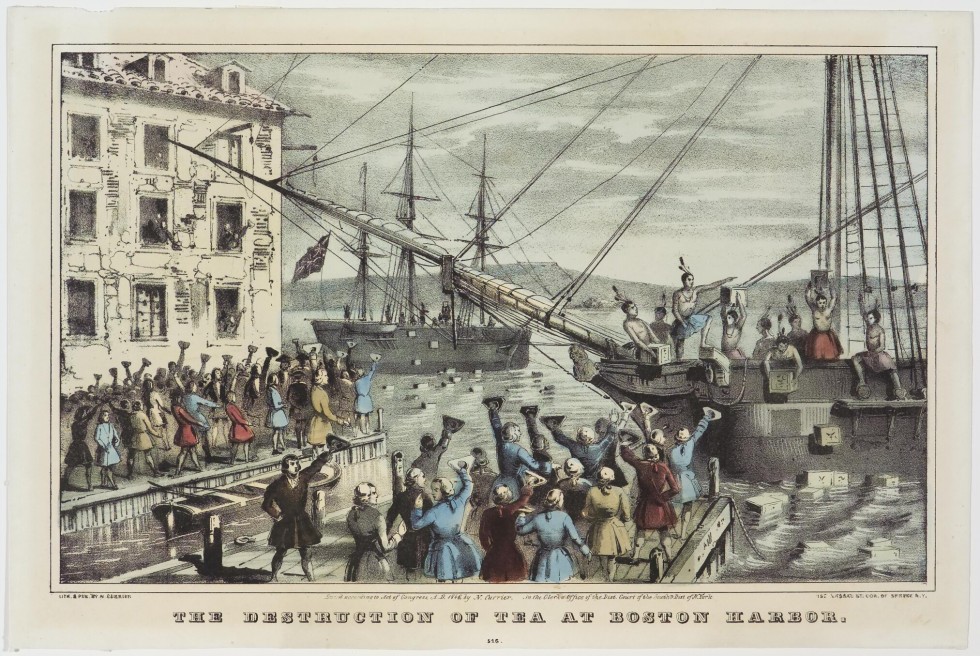
Moreover, taxes based on what you own – “asset seizure” – already exist – that’s what annual property taxes are. You pay some fraction of what you own and we, the government, maintain a functioning society around you and defend your ownership of the stuff you pay taxes on. There’s no reason we can’t extend this logic to “a billion dollars of stock” instead of a house.
“What happens to people who owe this tax but have all their money in illiquid assets, like private stock?”
They hire an accountant with their billion dollars and figure it out.
“No really”
If you have a billion dollars worth of stuff, and no one is willing to buy off or loan you $50 million based on that valuation, you don’t actually have a billion dollars, and it’s a public policy good that we’re forcing that conversation because we’re probably preventing you from swindling people. That said, the measure has an option for deferred payment (for years!) for people in this situation, rather than mandating anyone do anything crazy to liquidate immediately.
“Why not raise the capital gains tax/raise the inheritance tax/do some other hypothetical tax thing I just made up rather than the vewy scawy wealth tax?”
The 200 billionaires in California have a combined wealth of about $2 trillion ($2,000,000,000,000) – this is equal in size to half of the annual US federal budget. 5% of that would bring in $100 billion ($100,000,000,000) – intended to offset federal cuts to California’s Medicaid and food assistance programs, which are real and on this order of magnitude.
The amounts of money we’re talking about here sort of defy comprehension. We as Californians are a net contributor to the US – we pay the federal government $800 billion in taxes every year, and Trump and the Republicans in Congress have effectively stolen $30 billion of it through cuts to federal programs that are supposed to deliver benefits back to us. Based on California’s revenue estimates, to make up this money from other sources would require increasing personal income (including capital gains) tax by 20%, doubling corporate tax or sales tax, or raising taxes on cigarettes by 100000% (or some lesser increases split across these options). The billionaire tax is effectively the income tax option, skewed to target a number of people who would comfortably fit in two cars of a BART train. It’s practically the smallest number of people you can affect while making up our lost funds from sources entirely within the state.
“Won’t this measure hurt California’s economy, because the billionaires will move their companies elsewhere to avoid this tax and future similar taxes? And future people won’t start their companies here because they’re afraid of taxes?”
They tried this lie already: Tesla is back in California; SpaceX hasn’t left; Palantir is still predominantly hiring in Palo Alto (and even-less-billionaire-friendly New York City); and venture capital is still funding companies here rather than in Miami because they couldn’t hire there. California’s 50-year reputation for high taxes (deserved or otherwise) has not, in fact, deterred investment in the state. In the wake of this targeted tax, the billionaires might personally move to other jurisdictions; this would allow California parents of teenagers to sleep a lot more soundly at night.
California will maintain its weather, mountains, forests, ocean, lakes, and, because of all of that, people, and the love and culture that comes with them. Those people have a lot of unique and valuable skills, from making burritos to torturing robots into making better images of Garfield, and people who want to take advantage of those skills will have to set up shop here. We live in a magical place, and we’re sitting down one movie theater-full of our richest people and asking them to help out 15 million of their less fortunate neighbors. We’re also telling prospective future business leaders that here in California, we have a lot of great stuff, but also kind souls, and we expect them to help make the state fairer and more hospitable for everyone.
If they hear all that and decide to go elsewhere, good fucking riddance.
Democracy and Elections (Props 4, 5, 39)
🟢YES on Prop 4 – “Repeals Prohibition Against Public Funding of Election Campaigns”
🟢YES on Prop 5 – Make Recalling the Governor A Lot More Reasonable
🔴NO on Prop 39 – “Prohibits Citizens from Voting Unless They Present Government-Issued Identification.”
Prop 4 allows cities throughout the state to do something San Francisco already does: public financing of election campaigns. This creates a pool of government money to match donations to candidates who agree to voluntary spending limits. The theory is that this is an incentive to spend less on elections, and helps candidates who fundraise predominantly from small donors compete with those with large donors. There’s some evidence this works – several leading supervisor candidates are (as of this writing) not actively fundraising because they accepted San Francisco’s public matching funds and can’t spend more. New York City has a similar system, which Zohran Mamdani maxed out during his successful 2025 campaign. Prop 4 does not mandate this system, but it allows every jurisdiction in the state to opt in, which they are currently prevented from doing. Vote YES.
Prop 5 prevents the second coming of Governor Schwarzenegger by reforming California’s governor recall process. Currently, recalling the governor (triggered by 1.3 million people signing a petition to do so) puts two questions on the ballot: “do you want to kick out the current governor?” and “assuming we kick out the governor, who do you want to replace them?” This second question introduces a lot of chaos, as there is no requirement to win a majority, turning the race into a name recognition contest. This is how Arnold Schwarzenegger became governor, winning a larger minority of votes than Democratic powerhouse *checks notes* “Cruz Bustamante.” Prop 5 would remove the second question from the recall ballot, and if the governor was kicked out, they would be replaced by the lieutenant governor, which is the current system for replacing a governor who dies in office. This is both a generally less chaotic way of handling recall elections and will be specifically useful to future us when we inevitably recall Governor Becerra. Vote YES.
Prop 39 is a voter suppression law which would add dubious ID requirements when voting by mail or in person. Despite the biggest election crime in California being state Republican Party operatives in Southern California physically stealing ballots from Democratic-leaning areas, there remains a conspiracy theory that California has widespread voter fraud and non-citizens illegally casting ballots18. What Prop 39 will actually do is disenfranchise people who lose, forget, or do not have a valid ID (or who have changed their name at an inconvenient time), and allow election officials to turn away people who they claim have a “fake” ID. This is all downside with no benefit; vote NO.
Weirdly Specific Miscellaneous Topics (Props 38, 44)
🟢YES on Prop 38 – “Authorizes Bonds for Immunology Medical Research”
🔴NO on Prop 44 – “Requires Community Health Clinics Spend 90% Of Revenue on Program Services”
Prop 38 asks you to gamble on the biomedical research departments of the University of California. Prop 38 would create a multibillion dollar fund dedicated to university research into immunotherapy research for treating cancer and serious illnesses like Parkinson’s, Alzheimers, and diabetes. The money would go to public (university and nonprofit) research labs in California, who would retain any intellectual property the research produced, have to pay a dividend on any licensing fees they earn from that IP, and require licensees to sell any drugs at a discount to Californians. It’s… weird, and the biggest risk is that immunotherapy is not the right technique for treating serious illness. We don’t know yet. That’s what research is for, and Prop 38 asks each Californian to bet a dollar a month that the UC’s can produce yet another world-changing discovery. I’m voting YES.
We end with a banger: Prop 44 is a very specific requirement proposed for Federally Qualified Health Centers that they spend 90% of their money on “patient services.” What this means gets very technical very fast but the punchline is that it’s a cousin of the dialysis ballot proposition trilogy [1] [2] [3], in that it strengthens the nurses’ union’s hand against their employers, with unclear benefits for the nurses themselves and for patients. I dunno about you, but I’m pretty pissed off about repeatedly voting on dialysis. Vote NO.
Epilogue
This year’s guide was hard to write because there’s genuinely a lot at stake. There are a few opportunities to make things better, but a lot to make things worse, and that’s scary. Hopefully it comes across in the writing that I love it here; California is my home, presumably yours too, and I hope that you share my best wishes for our state and our 40 million neighbors. In addition to everything we have going for us in California, we have the benefit and responsibility of self-governance. Part of that responsibility is convincing our neighbors to do the right thing and not to listen to the people trying to scam them.
We listed how to get involved with the San Francisco races that we’re specifically volunteering on, and we would love your help and will happily get you started, but honestly volunteering for any campaign on the ballot that motivates you personally would be a tremendous act of service to our community. Walking around and leaving fliers on people’s doors for an afternoon is more than most people do. I met some of my best friends volunteering in 2024, and Election Day isn’t far away, so your time to do the same is limited. Get out there and win some hearts and minds❤️
- I’m being slightly hyperbolic but only just. So much of what’s wrong with California hinges on how much a small group of people – who very literally looked at the class divides at the height of the British Empire as a model and a goal – broke the state constitution. For further reading, consult the book Palo Alto and its discussion of Herbert Hoover and his legacy; despite how much the authors dislike each other, Ezra Klein’s Abundance also talks about how many of California’s problems are the result of people who genuinely wanted California’s government to be dysfunctional and made that dream a reality. ↩︎
- San Francisco has both a Sheriff’s Department and a Police Department because these are legally different jobs in California – the sheriffs work for the county (and each county is required to have them, as one of their main jobs is to secure county courts and transport inmates), while the police work for the city. ↩︎
- “They’re working hard by day and they party til the break of dawn at night” – Curtis Sliwa ↩︎
- I’m also imagining the absolute most effective version of Prop D, assuming that all “initiative ordinances” disappeared. In reality, wealthy groups (individuals, large businesses, and large labor unions) will keep placing things on the ballot – the median under those assumptions is more like 5.5 measures per ballot.
I’ve done these stats using the median because a few outlier elections drive the mean up. The mean ballot in the last 20 years has had 9 measures on it; under my “maximum Prop D” model, this would go down to 6. Under more realistic estimates, the average ballot would still have 7.2 measures to vote on it. Note also that even with maximum Prop D, the longest ballot would still have had 17 local measures on it (the November 2016 election was crazy). ↩︎ - This is not hyperbole. Amongst people who know, there’s consensus that without these measures passing and some sort of massive state or federal (lol) intervention, BART will stop running and be left to rot in place within five years. ↩︎
- I actually teared up a little reading this page because Caltrain electrification had been going on since I first moved to the Bay Area. The only bad thing I have to say about it is how long it took. It warms my heart that this obviously good thing has finally happened and been so well received. ↩︎
- It’s technically a “parcel tax,” which is distinct from an “ad valorem property tax” (the normal kind) by being not a tax on property value but instead on square footage and type of use. This distinction is important for getting around the strictures placed on California taxes by the British during the Reverse American Revolution. ↩︎
- This is arguably still lower than it should be; Salesforce negotiated a sweetheart deal for their specific parcel classification because they are a major funder of the campaign to place this measure on the ballot and get it passed. ↩︎
- An astonishing amount of arguing went into deciding what kind of tax this would be, and a sales tax (set higher in San Francisco) is a compromise that got large businesses onboard. If taxes could be legislated directly in California, this is almost certainly not what you’d pick, but we again suffer at the hands of the British and have to compromise on something that can win at the ballot in the five counties with BART stations in them. ↩︎
- 2020’s Prop I could not realistically gather enough signatures to be a special tax and still pass – it was the pandemic and there were not enough people were outside to sign clipboards. Then-Supervisor Dean Preston and several colleagues placed the measure on the ballot as a general tax, meaning its proceeds could be used on anything, and then campaigned as if it were a special tax, betting that voters, having voted on the tax for a specific purpose, would pressure the mayor into spending the money accordingly. This has not worked, with both mayors London Breed and Daniel Lurie not following through. Hopefully you can see why I described it as “a well-intentioned lie,” and know that this year’s Prop I seeks to make it truth. ↩︎
- To make a very long story short, San Francisco passed this contracting rule in 2016 to make sure queer city employees would never be sent on official business to a state where they might be subject to legal discrimination. I think the intention here was good, but it ran into the reality that, as it turns out, all prefabricated toilets are made in states with anti-LGBTQ laws on the books, driving the price of an ethically sourced artisanal toilet up to $1.7M. This attracted national attention, and in the end, the city accepted a donation of a toilet from a Nevada-based company and the Board of Supervisors repealed the rule. I went to and enjoyed the toilet’s piss-and-shit-themed opening party. The toilet was clean and unremarkable. ↩︎
- Supposedly this is the result of a pissing match between… complicated local politics figure Quentin Kopp and former mayor Art Agnos. Agnos employed a number of deputy mayors and paid them competitively, and through 1991’s Prop H, Kopp made sure both parts of that (hiring deputy mayors and paying them well) were prohibited. In addition to probably just wanting to delegate work, there’s a personal connection between Daniel Lurie and the last deputy mayors of San Francisco: one of them worked for his uncle. Such are the consequences of living in a small town and electing the scion of a wealthy family into government. ↩︎
If you are an actual CEQA professional, as we expect one person reading this to be, you are exempt from mandatory grass-touching.My editor vetoed this joke. ↩︎- This deserves a footnote because of how crazy it is but the punchline is that I don’t think you need to care too much. A small number of extremely wealthy people have bought a lot of undeveloped farmland ~an hour’s drive northeast of SF, with dubious plans to build a lot of things – moderate-density homes, industrial facilities right next to those homes, a shipyard that they failed to permit correctly, a car-free city that also doesn’t have a passenger rail connection to any other city – I could go on. If you want to hear a skeptical, credible person interview their CEO, I have a podcast for you. What you should know is that the people behind the city – billionaires who say really normal things – really want to build a new city of half a million people and expect that, if they build it, they’re going to control what happens there, independent of the will of those half-million people.
Also I try pretty hard not to talk about who put stuff onto the ballot as reasons to support or oppose but it would be malpractice to ignore that Prop 45’s authors are also the California Forever people. The intent is pretty clear. ↩︎ - Because We should expect Prop 43 to trigger an increase in politicians putting general purpose taxes on the ballot and claiming they do something that they don’t – an example of this actually happening is discussed in a footnote above. This erodes voters’ trust in government and makes all future taxes harder to pass. ↩︎
- California is one of the safest states to give birth in the country, and the odds of dying in childbirth (15 in 100,000) are 30 times worse than the odds of being affected by our hypothetical tax here. In addition to being a useful comparison I bring this up because the proceeds of the real tax will go a long way to keeping Californian mothers alive. ↩︎
- The real question is, will TurboTax California ask you “are you a billionaire” like they ask you “are you a victim of the Ottoman Empire.” ↩︎
- It is, in fact, legal for non-citizens to vote specifically in the San Francisco School Board election, because 1) they have kids in public schools and would like a say in how they’re governed and 2) federalism means that states and cities can actually extend the right to vote in local and state elections, just not federal ones. California has done this extremely minimally (just school boards in San Francisco and Oakland), but there is no reason this couldn’t theoretically expand in the future. ↩︎


Leave a Reply